Can Reverse Osmosis Systems Help Simplify Facility Operations?
Overview
- Public and institutional facilities manage multiple water-dependent systems, making water quality an important part of routine operations and maintenance.
- Reverse osmosis gives facility teams greater control over treated water, making equipment care and water treatment more predictable.
- CWS Philippines provides Pentair Everpure RO solutions designed around the water conditions and operational requirements of institutional facilities.
Facility teams spend considerable time addressing equipment problems linked to water quality in their buildings. Mineral deposits and other impurities can accumulate in equipment, creating additional maintenance requirements that become harder to manage across busy institutional facilities. With these recurring concerns affecting routine maintenance, can Reverse Osmosis systems (RO) truly simplify facility operations?
Yes, they can. As a top provider of RO solutions in the Philippines, CWS Philippines helps public sector and institutional facilities select systems based on their source-water conditions and operational requirements. Let’s dive into how RO can support more manageable facility operations.
How RO Systems Simplify Operations

RO systems give teams greater control over the quality of water supplied to selected applications. By removing many dissolved contaminants before water reaches equipment, RO can make treatment requirements more predictable.
Consistent Water Quality
RO systems give facility teams greater control over the quality of water used for specific applications. Source water can contain varying levels of dissolved solids, minerals, and other impurities that affect the water supplied to equipment. By reducing many of these substances before use, RO helps facilities maintain more consistent treated water.
This consistency makes water quality easier to monitor across operations. A properly designed system matches the facility’s source water and intended applications, giving staff a clearer treatment process to manage. It can also reduce the need to respond to changes in untreated water quality that may affect ongoing facility processes.
Equipment Protection
Water quality can affect the maintenance needs of equipment that uses or heats water. Dissolved calcium, magnesium, and other minerals can form deposits on internal components and increase the need for cleaning and descaling. RO reduces many of these minerals before the water reaches suitable equipment.
These deposits can affect heating elements, valves, pipes, and other internal parts by creating layers that interfere with normal operation. By supplying water with lower levels of scale-forming minerals, RO helps keep these components cleaner and reduces the conditions that can lead to restricted flow or inefficient heat transfer. This helps protect and supports more reliable performance between scheduled maintenance.
Reduced Chemical Handling
RO can reduce the concentration of certain dissolved substances that may require additional treatment. Water passes through a semipermeable membrane that separates many dissolved impurities from the treated supply, reducing the load that other treatment stages may need to address. For suitable applications, this can simplify the overall water treatment process.
The need for additional treatment still depends on the facility’s source water and intended use. Pretreatment may be required to protect the RO membrane, and some applications may need post-treatment to meet specific water-quality requirements. With the appropriate system design, RO can reduce certain treatment requirements and give facility teams a more controlled process to manage.
Lower Downtime
Reliable water treatment can help facilities keep water-dependent processes running on schedule. When water quality is controlled, facility teams have a clearer basis for operating equipment and responding to changes in system performance. This reduces uncertainty and makes water-related equipment issues easier to anticipate.
A planned maintenance window is easier to coordinate than an unexpected stoppage that requires staff to adjust schedules or find temporary workarounds. By making water treatment more consistent and maintenance needs easier to plan, RO can support steadier facility operations.
Operational Considerations

The operational value of an RO system depends on how well the treatment setup matches the facility’s water conditions. Source-water quality, system capacity, and maintenance needs all affect how effectively the system supports day-to-day operations.
Pretreatment Needs
Evaluate pretreatment based on the contaminants and conditions in the facility’s actual water supply. High sediment levels or other feed-water conditions can shorten membrane life if they are not addressed first. A source-water analysis can show which pretreatment stages are needed, preventing facilities from installing a unit that is poorly matched to the water entering the system.
Wastewater Management
Before installation, the facility should have a clear plan for handling the RO system’s reject water. RO does not convert all incoming water into treated water, so the system will discharge a portion of the feed as concentrated wastewater, with the amount depending on its recovery rate and operating conditions. Facilities need to confirm that their existing drainage or wastewater system can receive this flow.
Simplify Water Treatment In Your Facility with RO Systems From CWS Philippines
CWS Philippines helps public sector and institutional facilities plan RO systems around their existing water infrastructure and operational requirements. As a top provider of Pentair Everpure solutions in the Philippines, CWS can assess source-water conditions, intended applications, flow requirements, and installation considerations to develop a treatment setup suited to the facility.
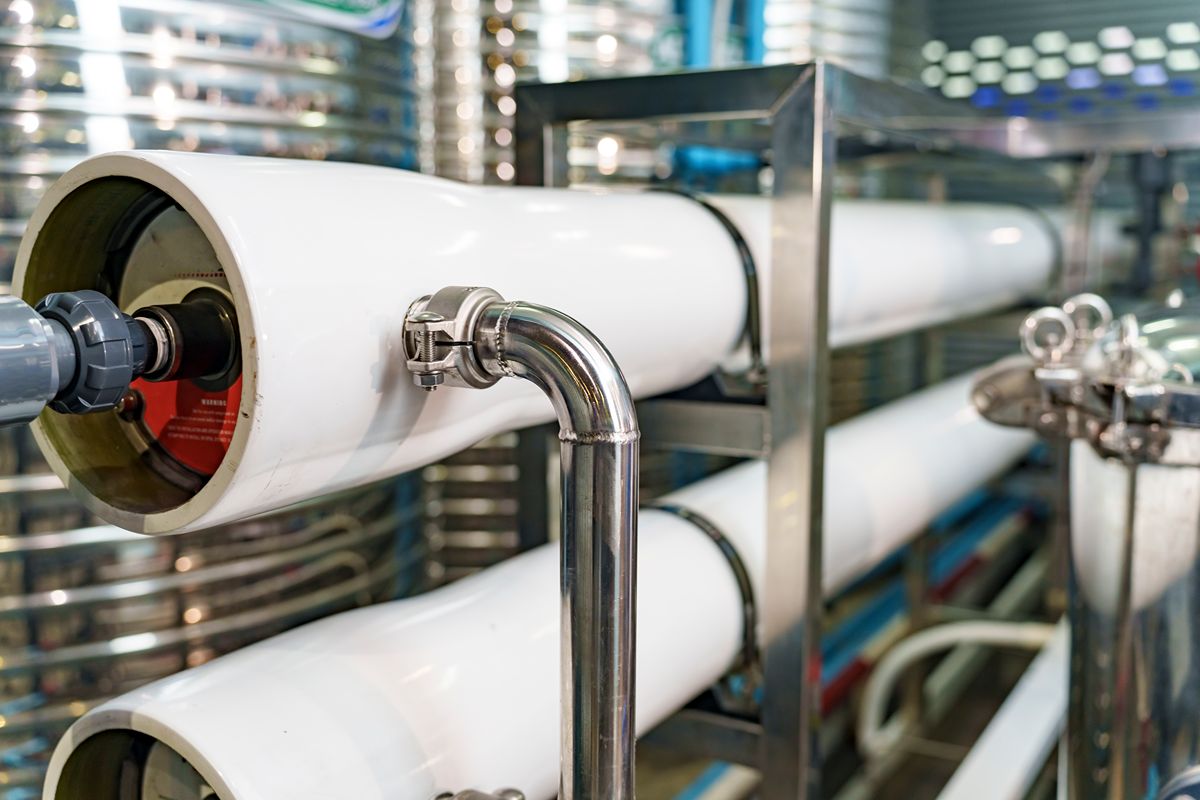
Pentair Everpure RO systems use pressure to move water through a semipermeable membrane that reduces many dissolved solids, minerals, and other impurities. Using this membrane separation process, the system produces treated water with fewer contaminants, helping facilities maintain greater control over water quality.
Key Takeaway
Can RO systems simplify facility operations? With the right system design, yes, they can. The right setup can give facility teams greater control over water quality and reduce operational issues linked to untreated source water.
CWS Philippines provides Pentair Everpure RO solutions for public sector and institutional facilities with specific water treatment needs. Our team can assess your source water and facility needs to determine the right solution for your building’s needs. Contact us today to find a suitable water filtration solution for your facility.