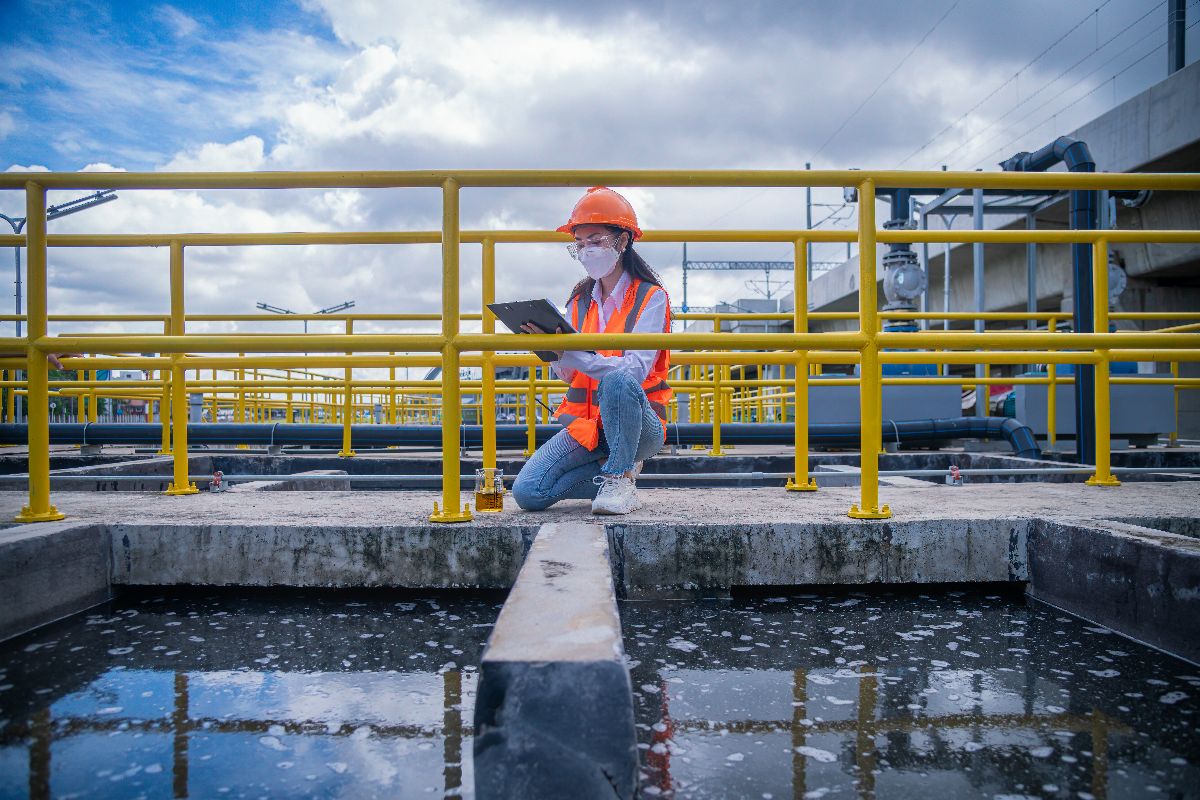
Where are Sewage Treatment Plants Located?
Where are sewage treatment plants located?
- Near residential and commercial communities
- Low-lying areas
- On the outskirts of cities or barangays
- Near bodies of water (but with strict regulations)
- Inside industrial parks or large commercial complexes
Overview
- Sewage treatment plants are strategically located near residential, commercial, and industrial areas to manage high wastewater volumes efficiently.
- STPs’ placement also considers natural factors like low-lying terrains and proximity to water bodies for optimal flow and discharge.
- CWS Philippines Inc. specializes in delivering comprehensive sewage treatment solutions, ensuring safe, compliant, and sustainable wastewater management across diverse sites.
Industrial facilities generate large volumes of wastewater that require immediate, efficient treatment. For this reason, contractors in the Philippines strategically install sewage treatment plants (STPs) in various areas, positioning them near utility networks for seamless operation and compliance.
In this article, we take a closer look at where sewage treatment plants are located and why placement matters for industrial operations. Understanding these locations helps facility managers plan smarter, maintain efficiency, and meet environmental requirements with confidence.
Near Residential and Commercial Communities
Developers and operators place sewage treatment plants near subdivisions, condominiums, commercial centers, and mixed-use properties because these areas generate large volumes of wastewater every day. Wherever people live, eat, shop, and work, wastewater follows.
Planners do not choose these locations at random. Local building codes and environmental regulations require property owners to install dedicated sewage treatment systems to protect nearby water bodies and prevent pollution.
By treating wastewater from sinks, restrooms, kitchens, and laundry systems on-site, these facilities ensure safe discharge or reuse while maintaining compliance and environmental responsibility.
Low-lying Areas

Developers often site sewage treatment plants near riverbanks, floodplains, reclaimed coastal land, or areas close to creeks and drainage basins. Because water naturally flows and collects in these locations, operators can gather wastewater from nearby facilities more efficiently and reduce reliance on heavy pumping systems.
Placing STPs in these areas also allows gravity to support hydraulic flow across key treatment stages. Processes such as sedimentation, equalization, and discharge run more smoothly to keep operations stable and predictable.
Even during peak usage or the rainy season, low-elevation sites help sustain consistent flow rates and reduce risks, such as backflow or pressure buildup in sewer lines.
On the Outskirts of Cities or Barangays
They utilize peripheral zones to build large-scale sewage treatment facilities without disrupting commercial hubs or residential communities. Because treatment plants need ample space for clarifiers, aeration tanks, sludge processing units, and future expansion, outer-city areas provide the ideal physical footprint.
Locating plants away from dense urban centers also helps protect daily public activity. Even with advanced odor control and noise-reduction technologies in place, situating facilities at a safe distance minimizes public exposure to potential environmental impacts while supporting smooth, compliant operations.
Near Bodies of Water (But with Strict Regulations)

Many sewage treatment plants are placed in proximity to the bodies of water such as rivers, lakes, creeks, or coastal zones. This location makes operational sense because treated wastewater, once it meets national effluent standards, needs a discharge point where it can safely re-enter the natural water cycle.
However, being near these sites doesn’t mean plants are placed carelessly. These are heavily governed by DENR environmental compliance certificates (ECCs), water quality regulations, buffer zone requirements, and routine checking to ensure they do not harm surrounding ecosystems.
The treatment facility must persistently meet parameters for Biological Oxygen Demand (BOD), Total Suspended Solids (TSS), nutrients, and other regulated pollutants before releasing water.
Inside Industrial Parks or Large Commercial Complexes
STPs can be within industrial parks, ecozones, and large commercial complexes because these sites generate large volumes of wastewater that need centralized and consistent treatment. Locating them inside these zones allows facility managers and operators to treat wastewater right at the source.
Here, a centralized treatment plant ensures uniform adherence to environmental policies. It also simplifies monitoring, upkeep, and reporting since all wastewater passes through a single, controlled facility.
It reduces the risk of unlawful discharge into drainage systems and other logistical difficulties, such as transporting wastewater off-site.
Factors Influencing Sewage Treatment Plants’ Location
Choosing where to build a sewage treatment plant is never random. It must follow careful planning, strict regulations, and practical considerations. The goal is to place them where they can efficiently collect wastewater, operate safely, and alleviate environmental impact.
- Gravity Flow: Consider the site’s elevation, slope, and layout to maximize natural flow and reduce operational costs and system strain. It’s to ensure your facility’s fluids move efficiently without relying heavily on mechanical pumping.
- Elevation: Higher ground can help prevent backflow and flooding, so it’s very important to evaluate terrain when selecting a location. It will influence how easily wastewater can flow and be treated.
- Proximity to Water Bodies: STPs must be nestled near rivers, lakes, or the coast because treated water needs to be discharged back into natural water bodies. Being nearby reduces piping expenses, ensures efficient effluent flow, and supports natural dilution while complying with environmental standards.
- Area Served: Assess the size and population of the area served to determine the plant’s capacity needs and treatment methods. Adequate planning guarantees the facility can manage current and future wastewater volumes.
Partner with a Trusted Sewage Treatment Plant Contractor: CWS Philippines Inc.
Managing wastewater effectively is crucial for any facility, whether industrial, commercial, or residential. That’s why CWS Philippines Inc. is always ready to help. As a leading sewage treatment plant contractor in the Philippines, we provide end-to-end solutions that cover consultation, design, supply, installation, and maintenance of advanced wastewater treatment systems.
Our Everpure polishing filters further improve water quality, ensuring treated water is safe, clean, and compliant with environmental guidelines. With our professional technicians and a commitment to excellence, we ensure standout STPs that protect public health and preserve water resources.
Key Takeaway
Understanding where sewage treatment plants are located helps industrial and commercial facilities appreciate the careful planning behind wastewater management.
For facilities looking for dependable sewage treatment systems, CWS Philippines Inc. is your trusted partner. With comprehensive services including consultation, design, installation, and upkeep of modern solutions, we guarantee safe, efficient, and compliant wastewater handling.
Contact us today to discuss your project and secure professional sewage treatment solutions tailored to your needs.